Naval IRST
A naval IRST (InfraRed Search and Track) is a passive, 360° infrared surveillance system that detects, classifies and tracks air and surface threats around a warship, such as sea-skimming and hypersonic missiles, drones, fast attack craft, RHIBs and unmanned surface vehicles. HGH’s naval IRST solution is based on the SPYNEL panoramic infrared surveillance camera: fully passive, adapted to rough sea conditions through gyrostabilization, and able to feed automatic detection and tracking data into the ship’s Combat Management System (CMS) for a quick reaction time 24/7.
Warship Protection – InfraRed Search&Track
More than ever, situational awareness is a key factor to fleet protection. The current marine battlefield is constantly evolving, as latest-generation technologies emerge. Threats are multiplying and take various forms: drones, hypersonic missiles, USV … .
To answer the growing needs in terms of embedded Infrared Search and Track systems required by worldwide navies, HGH Infrared Systems provides an IRST solution based on the SPYNEL wide area surveillance camera: a passive early warning system embedded on your ship for a 360° protection against asymmetrical threats.
Warship protection: Main Challenges
The rise of new technologies urge naval forces to adapt their defence, detection and threat-tracking capabilities against air and surface asymmetric targets. Low air targets such as missiles, drone swarms, and other fast approaching threats such as RHIBS or USVs, make it difficult for current surveillance sensors to ensure a full protection of the vessel.
In order to provide a robust warship protection HGH Infrared Systems allows to set up a full panoramic 3D defensive bubble. An adapted IRST must be implemented to the vessel’s existing protection system, provided that they meet certain requirements: The IRST should be fully passive, in order to be undetectable by the enemy. It should be adapted to rough sea conditions, thanks to an effective gyrostabilization. The IRST should also enable a quick reaction time, thanks to an automatic data fusion into the vessel’s Combat Management System.
Warship protection: Main Threats
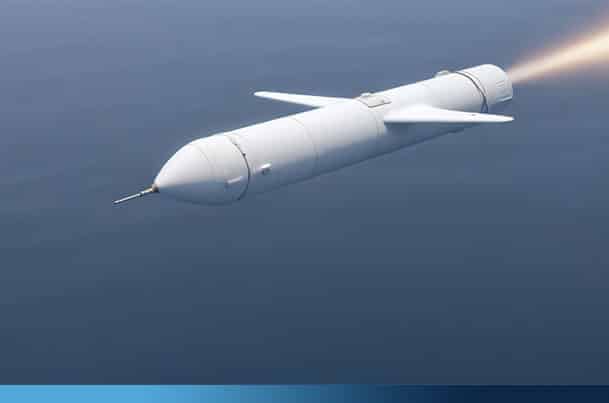
Missiles : low height sea-skimming missile, hypersonic missile with high velocity and manoeuvrability, air-to-surface or surface-to-surface missiles.
Aircrafts : fighter, stealthy aircraft, light of heavy helicopter, small UAV, tactical UAV,
Surface asymmetric threats : Fast Incoming Attack Craft (FIAC), Rigid-Hulled Inflatable Boat (RHIB), jet-ski, Unmanned Surface Vehicle (USV), small boats with Low Radar Cross Section (RCS).
Naval IRST
With Spynel Panoramic Infrared Cameras

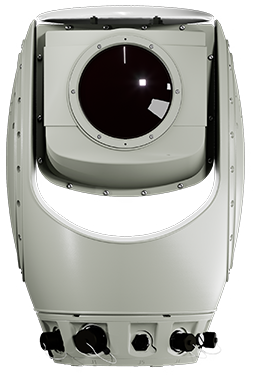
HGH Infrared Systems has developed an innovative panoramic solution detecting and categorizing long-range threats. The SPYNEL infrared camera range protects any kind of critical infrastructures or military assets thanks to a 360° camera. Fully passive, the SPYNEL camera ensures real-time panoramic video and automatic detection, classification & tracking.
How to secure your warship against asymmetric threats?
Spynel Panoramic Camera installation on ships
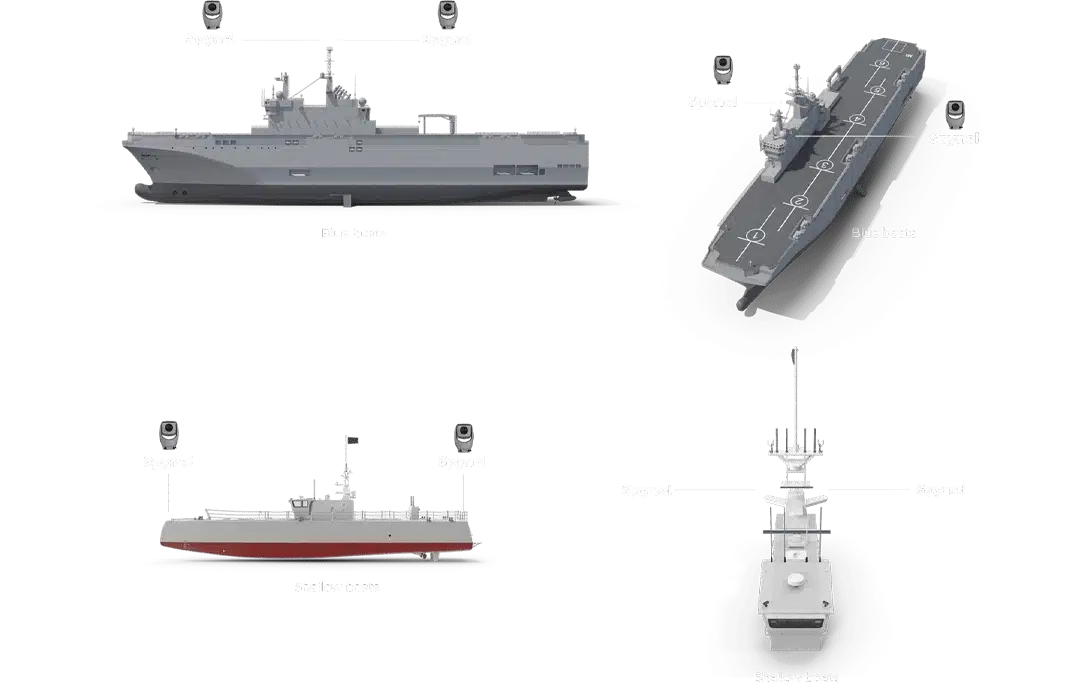
How to secure your warship against asymmetric threats?
| Threat category | Examples | Detection challenge | How SPYNEL helps |
|---|---|---|---|
| Missiles | Low sea-skimming missiles, hypersonic missiles, air-to-surface and surface-to-surface missiles | Low height, high velocity and manoeuvrability, short reaction time | Early detection through real-time 360° panoramic imaging, automatic tracking, data fusion into the CMS |
| Aircraft | Fighters, stealth aircraft, light or heavy helicopters, small and tactical UAVs | Small size, low signature, multiple simultaneous targets | Automatic detection, classification and simultaneous tracking of multiple targets |
| Surface asymmetric threats | FIAC, RHIBs, jet-skis, USVs, small boats with low RCS | Low radar cross section, fast approach | Detection of small boats and low-profile targets, low false alarm rate |
Why choose Spynel for warship protection?
360-Degree Coverage
SPYNEL offers complete 360-degree surveillance, providing uninterrupted monitoring of the maritime environment, eliminating blind spots, and ensuring comprehensive situational awareness for naval security.
Early Threat Detection
With its real-time panoramic imaging, SPYNEL enables the early detection of threats such as small boats, swimmers, or low-altitude aerial objects (UAV, aircraft, missiles...), enhancing response time and preventing potential security breaches.
Multi-Sensor Fusion
The integration of multiple sensors within SPYNEL, including infrared and visible channels, ensures a high level of accuracy and reliability in detecting and tracking targets, even in challenging weather conditions or low visibility scenarios.
Automatic Tracking Capabilities
SPYNEL's advanced algorithms facilitate automatic and simultaneous tracking of multiple targets, enabling efficient monitoring of dynamic maritime environments and reducing operator workload.
Passive Surveillance
The passive infrared technology used in SPYNEL allows for covert surveillance without emitting any signals, ensuring stealth operations and preventing detection by adversaries utilizing electronic countermeasures.
Adaptability and Scalability
Designed for flexibility, SPYNEL seamlessly integrates with existing naval security systems, offering scalability and customization options to meet specific operational requirements and evolving security needs.
Low False Alarm Rate
Leveraging advanced signal processing, SPYNEL minimizes false alarms, enhancing the system's reliability and ensuring that responses are directed towards genuine threats, optimizing resource allocation and operational efficiency.
Proven Reliability
HGH's SPYNEL has a track record of reliability and effectiveness in various maritime security applications worldwide, endorsed by its successful deployment in naval operations, safeguarding critical maritime assets and territories.
Frequently Asked Questions
A naval IRST (InfraRed Search and Track) is a passive sensor installed on a warship to detect and track air and surface threats through their infrared signature. It provides 360° panoramic surveillance and early warning without emitting any signal. HGH’s naval IRST solution is based on the SPYNEL wide area surveillance camera.
A naval IRST can detect low sea-skimming and hypersonic missiles, drones and drone swarms, aircraft and helicopters. It also detects surface asymmetric threats such as fast attack craft (FIAC), RHIBs, jet-skis, unmanned surface vehicles (USV) and small boats with a low radar cross section. SPYNEL covers all of these threats with a single 360° camera or with two independent cameras to get a full panorama without blind sectors.
A passive IRST emits no signal, so it cannot be detected by the enemy, which keeps the ship covert while providing early warning. With SPYNEL, passive infrared technology prevents detection by ennemies using electronic countermeasures, while automatic tracking of multiple targets reduces operator workload.
Yes. SPYNEL integrates with existing naval security systems, and its automatic detection and tracking data can be fused into the vessel’s Combat Management System, enabling a quick reaction time. Its gyrostabilization makes it adapted to rough sea conditions.

References