GROUND-BASED AIR DEFENSEWith 360 thermal imaging technology
Infrared sensors enhance Ground-Based Air Defense (GBAD) systems by providing passive detection, tracking and classification capabilities. Unlike radar, IR sensors do not emit any electromagnetic signals, improving resilience against jamming and electronic warfare while enabling the detection of threats such as drones, cruise missiles, helicopters, and stealthy aircrafts with low radar cross section. Integrated into C2 and multi-sensor GBAD architectures, IR technology improves situational awareness and tracking accuracy to adapt to evolving threats.
Passive surveillance for GBAD
During a conflict between two states, the first attack strategy is to establish air superiority by destroying the air defense systems and military infrastructures throughout the enemy country. To maintain airspace sovereignty, Command and Control (C2) centres rely on surface radars to provide them with a real-time air surveillance picture. Nevertheless adversaries now have unprecedented means to render 2D or 3D radar inoperable.
SPYNEL Infrared Search and Track is a passive electro-optical system providing automatic detection, tracking and classification of a large variety of threats including aircrafts, helicopters and drones while remaining undetectable. With its real-time thermal panoramic video stream of the air space, SPYNEL is a reliable and mobile solution to alert and protect land forces in emergency situation. It can be easily used with Very Short-Range Air Defence (V-SHORAD) systems to provide a fully passive air defence solution – from detection to reaction, undetectable by the enemy.
Ground Based Air Defense: Main Challenges
Ground-based air defense systems play a pivotal role in safeguarding airspace, but they encounter distinct challenges that demand strategic solutions for effective deployment.
Air Defense systems undetectable by the enemy
Key element for the Air Missile Defense (AMD) is to be undetectable by the enemy. Air defence systems are often the first targets destroyed during a new conflict. Having a passive solution, as an alternative to traditional radars, becomes critical.
Quick deployment
In order to follow the evolution of the battle field, the GBAD systems are often mounted on trailer. It is then essential to have a system compact and robust, which can be quickly mounted on a tripod or on a vehicle.
Advanced Stealth Technologies
Modern aircraft often employ advanced stealth technologies, presenting a challenge for ground-based air defense systems to detect and track them effectively.
Supersonic and Hypersonic Threats
The proliferation of supersonic and hypersonic missiles poses a significant challenge, as their high speeds demand rapid response times and sophisticated interception capabilities.
Ground Based Air Defense: Main Threats
Unmanned Aerial Systems (UAS)
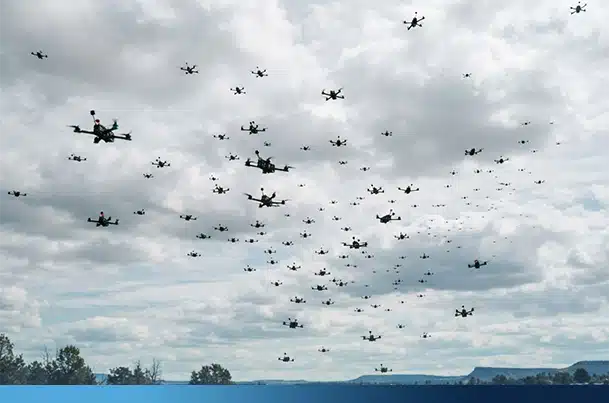
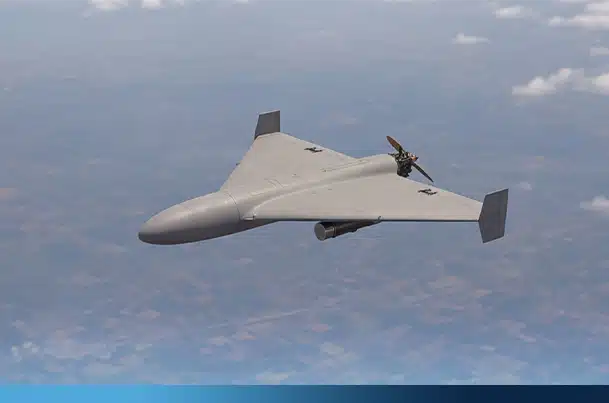
The prevalence of unmanned aerial systems, including drones, introduces a dynamic threat landscape, with small, agile, and low-flying targets requiring precise and adaptable countermeasures.
Fighter Aircraft
Military aircraft, used for air-to-air or air-to-ground combats, is the most common threat for ground-based air defense. The stealthy design of fighter aircraft makes it hardly detectable by radar.
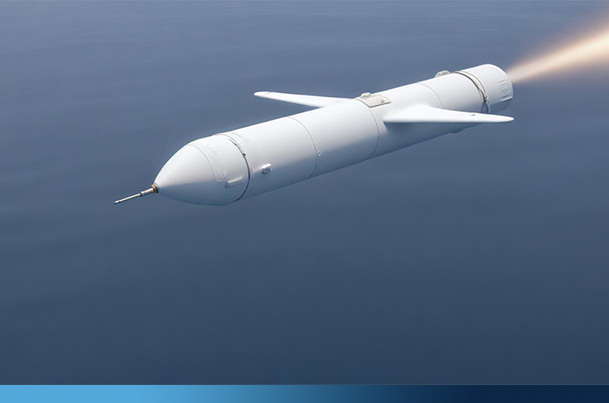
Cruise Missile Threats
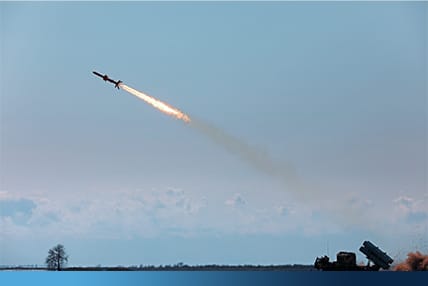
The increasing prevalence of cruise missiles with advanced guidance systems necessitates air defense systems capable of effectively countering these precision-guided threats.
Ground Based Air Defense Solution
With Spynel Panoramic Infrared Cameras

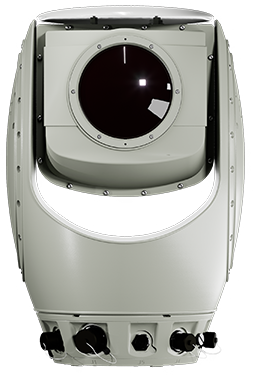
HGH Infrared Systems has developed an innovative panoramic solution detecting and categorizing long-range threats. The SPYNEL infrared camera range protects any kind of critical infrastructures or military assets thanks to a 360° camera. Fully passive, the SPYNEL camera ensures real-time panoramic video and automatic detection, classification & tracking.
How to secure Ground Based Air Defense?
With Spynel Panoramic Infrared Cameras
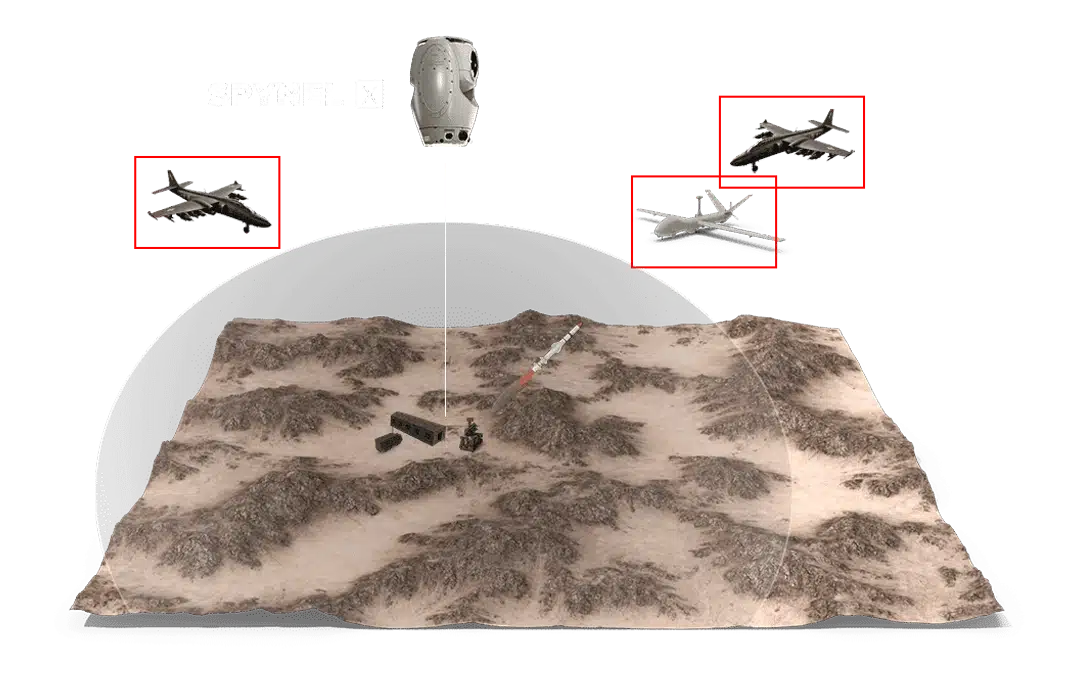
How SPYNEL 360° camera enhances Ground-Based Air Defense (GBAD) systems
| Air Defense Challenge | SPYNEL Capability | Operational Benefit |
|---|---|---|
| Drone detection | Passive infrared surveillance | Early detection of low-flying UAS threats |
| Stealth aircraft tracking | Thermal signature detection | Detection of low-RCS and stealth targets |
| Electronic warfare environments | Passive sensing technology | Immune to radar jamming and RF interference |
| 360° airspace monitoring | Panoramic infrared imaging | Continuous situational awareness with no blind spots |
| GBAD system integration | Data fusion with C2 and air defense systems | Enhanced target tracking and faster decision-making |
| Mobile air defense operations | Rapid deployment capability | Quick operational readiness in the field |
Why Choosing Spynel for Ground Based Air Defense?
360-Degree Situational Awareness
The SPYNEL Infrared Camera offers unparalleled 360-degree coverage, eliminating blind spots and providing comprehensive situational awareness for ground-based air defense systems.
Fully Passive Air-Defense Solution – From Detection to Reaction
The coupling of very short-range air defense system with SPYNEL IRST provides ground forces a fully passive ground-based air defense solution. This solution can be deployed in just a few minutes and remain undetectable by the enemy. SPYNEL provides azimuth/elevation angle to localize precisely the direction of the targets.
Fully Passive Air-Defense Solution – From Detection to Reaction
The coupling of very short-range air defense system with SPYNEL IRST provides ground forces a fully passive ground-based air defense solution. This solution can be deployed in just a few minutes and remain undetectable by the enemy. SPYNEL provides azimuth/elevation angle to localize precisely the direction of the targets.
Effective Detection of Stealthy Targets
Capable of detecting heat signatures, the SPYNEL camera enhances the ability to identify and track aircraft equipped with advanced stealth technologies, addressing the challenges posed by stealthy threats.
Detection and Tracking of Unmanned Aerial Systems (UAS)
SPYNEL's infrared technology facilitates the detection and tracking of unmanned aerial systems, including drones, offering precise countermeasures against these dynamic and agile threats.
Temporary Surveillance
Fully flexible, SPYNEL offers a lightweight solution and is readily adaptable to the specific operational needs of ground-based air defense. Mounted on a tripod or on a vehicle, SPYNEL is easy to transport and to deploy.
Rapid Target Acquisition
With its real-time monitoring capabilities, the SPYNEL camera enables rapid target acquisition, crucial for countering fast-moving threats and ensuring swift response times in ground-based air defense scenarios.
Resilience Against Electronic Warfare
SPYNEL's reliance on infrared signatures makes it less susceptible to electronic warfare and jamming, ensuring continued functionality in the face of adversarial attempts to disrupt radar and communication systems.
Reduced False Alarms with Advanced Analytics
Integration of exclusive analytics and artificial intelligence minimizes false alarms by distinguishing routine activities from potential security threats, optimizing the efficiency of ground-based air defense operations.
Enhanced Cruise Missile Defense
SPYNEL's performances contribute to enhanced defense against cruise missiles by providing early detection and tracking, allowing for timely and effective interception measures.
3D Target Location Capability
With CYCLOPE Software‘s Triangulation Plugin, the exact distance and altitude of each target is automatically calculated. Two SPYNEL sensors are required, and installed at a short distance from each other, to get the 3D location (GPS/altitude) of multiple targets in a fully passive mode. This creates a “protective bubble” around a very wide area, and provides the V-SHORAD with very accurate information on the targets.
Frequently Asked Questions
IR sensors and radar provide different but complementary detection capabilities. Radar measures the position and movement of targets using the electromagnetic waves reflected by the target, while infrared sensors detect the thermal radiations emitted by the target itself. Combining both technologies improves detection reliability, target tracking, and overall situational awareness, especially in contested environments. IR sensors can be used to compensate the lack of performances of GBAD radars in various situations: coverage gap, low altitude layer, stealthy aircrafts, low RCS targets, hypersonic missiles, jammed environment…
Current trends in GBAD sensor fusion include the integration of multiple active and passive technologies to improve threat detection and tracking.
360° SPYNEL IR Sensors can be used for passive detection of any kind of air targets in standalone mode or combined with long range Pan-Tilt-Zoom EO cameras to increase the operational range for classification and identification.
Defense organizations are increasingly adopting AI-assisted data fusion, open architectures, and distributed sensor networks to enhance situational awareness, strengthen resilience against electronic warfare, and enable faster decision-making. These approaches are particularly valuable for detecting low RCS threats such as drones and cruise missiles.
Modular GBAD architectures improve resilience by allowing operators to easily add or upgrade capabilities as threats evolve. This includes integrating new radars, infrared (IR) panoramic systems, and counter-UAS technologies to improve the detection and tracking of drones and hypersonic missiles. By combining different sensors and defense layers, modular GBAD systems provide more reliable protection and can continue operating effectively even if one component is disrupted.
Yes. Infrared sensors can detect drones by identifying the thermal signatures generated by their motors, batteries, propulsion systems, or aerodynamic heating. This makes IR technology particularly valuable for counter-UAS operations, especially when small drones are difficult to detect by using radar technologies.
Infrared sensors can help detect and track low-flying or hypersonic missiles by identifying their thermal emissions. When integrated into Command-and-Control systems, they contribute to earlier detection and improved tracking of threats.
Passive sensors such as infrared systems do not emit electromagnetic signals and therefore cannot be detected or jammed by the enemy. They improve operational discretion, reduce vulnerability to electronic warfare, and provide an additional layer of surveillance.
SPYNEL offers ITAR-free infrared surveillance technology, reducing U.S. export-control constraints on Defence programmes. For GBAD, this means fewer export restrictions, easier procurement and integration, and more freedom to deploy and support the system, helping European forces maintain greater control over their Defence capabilities.

References