


IR Source Calibration & Measurement HGH High-Precision Services for MWIR, LWIR & SWIR
Radiometric Calibration
Principle of Radiometric Calibration
Unlike thermometric calibration, radiometric calibration of your IR source directly measures the optical radiation that your camera or sensor detects. This process accounts for all parameters, including the emissivity of the emissive plate or cavity.
At HGH, we have designed a radiometric calibration bench that measures the optical radiation of any IR source in the Middle-Wave Infrared (MWIR) and Long-Wave Infrared (LWIR) bands by comparison with secondary IR Reference sources. These secondary standards are themselves calibrated by comparison with International Primary Standards, ensuring the traceability of our radiometric calibration certificates toward these Primary Standards.
The comparison is made using a precise pyrometer (for LWIR) and a highly sensitive radiometer (for MWIR), both exclusively designed by HGH.
For more information about our calibration bench and procedure, please read our papers
Measurement Range
Our radiometric calibration services for MWIR and LWIR are available at the following temperature setpoints:
- Low temperatures: 0°C, 20°C, 37°C, 42°C, 50°C, 70°C, 110°C, and 150°C
- Mid temperatures: 100°C, 200°C, 300°C, 475°C, and 600°C
- High temperatures: 300°C, 500°C, 700°C, 900°C, 1200°C (MWIR only), and 1300°C (MWIR only)
Feel free to contact us for other temperature setpoints. HGH can also handle calibration services for Short-Wave Infrared (SWIR).
Uniformity Mapping
Principle of IR Source Uniformity Measurement
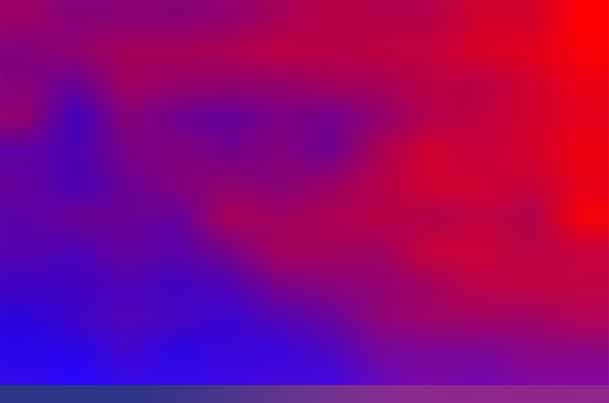
Measurement Range and Results

Uniformity is one of the most critical parameters for IR sources and blackbodies, as they are frequently used for non-uniformity correction (NUC) of cameras or for simultaneous calibration of multiple sensors.
HGH has developed an exclusive uniformity measurement bench to accurately assess the uniformity of IR sources. The measurement principle is based on optical scanning of the emissive surface, creating a temperature map of the tested blackbody. The radiometer used for this mapping has an NETD (Noise Equivalent Temperature Difference) better than the best expected residual non-uniformity, and it is free from the Size-of-Source Effect (or Dome effect), ensuring the highest accuracy for uniformity mapping.
For more information about our uniformity measurement bench, please read this paper.
Obtain a detailed temperature map indicating the minimum and maximum temperature points, along with the standard deviation calculation. These maps are available for the following setpoints:
50°C, 70°C, 100°C, 110°C, 150°C, 200°C, 300°C, 475°C, 500°C, 600°C, 700°C, 900°C, 1200°C, and 1300°C.
Thanks to the small optical spot of our radiometer, our bench can measure the uniformity of any source, including cavity-type sources.
Ready to optimize your electro-optical maintenance operations?
Looking to improve your thermographic camera calibration setup? Need a blackbody system adapted to your production line or research lab ?

References


References